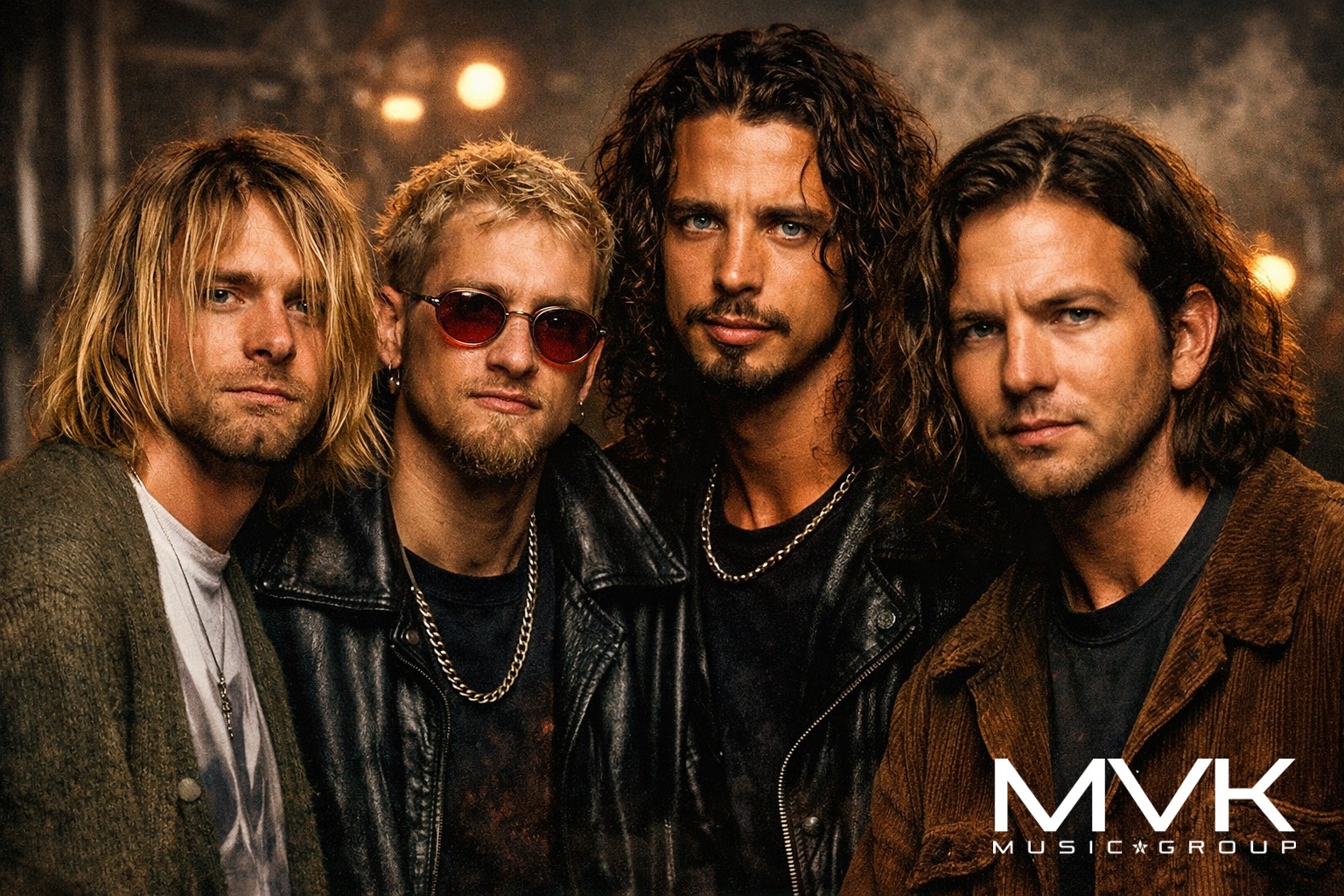
In the late 1980s and early 1990s, a gritty, distorted sound clawed its way out of the Pacific Northwest and rewrote the rules of rock music. Known as grunge, this raw, emotionally charged genre rejected polish, glam, and excess—and in doing so, captured the voice of an entire generation. Grunge music, often described as a raw and unpolished blend of punk, metal, and indie rock, emerged from the Pacific Northwest in the mid-1980s and exploded into mainstream consciousness by the early 1990s. At the heart of this movement was Seattle, Washington, a city whose rainy, overcast atmosphere seemed to perfectly mirror the angst, introspection, and rebellion that defined the genre.
Though its mainstream reign was brief, grunge’s impact has proven anything but fleeting. Its influence still echoes through modern rock, alternative, punk, metal, and even pop music today.
The Birth of Grunge: Dirt, Distortion, and Discontent
Grunge emerged in Seattle, Washington, a city geographically isolated from the major music industry hubs of Los Angeles and New York. That isolation fostered a fiercely independent scene rooted in DIY ethics, underground clubs, and small indie labels—most notably Sub Pop Records.
Musically, grunge blended:
- Punk rock’s aggression and anti-establishment attitude
- Heavy metal’s thick riffs and distorted guitars
- Indie and garage rock’s raw production
- Lyrics steeped in alienation, anxiety, depression, and social disillusionment
This wasn’t music designed for stadium lights or hair spray—it was loud, imperfect, and brutally honest.
The Seattle Explosion: A Perfect (and Brief) Storm
By the late ’80s, Seattle had become ground zero for a movement that would soon dominate global airwaves. Several bands—each distinct in sound but united by attitude—rose almost simultaneously:
- Nirvana – The band that detonated grunge into the mainstream with Nevermind (1991). Kurt Cobain’s songwriting balanced melody with pain, vulnerability, and rage.
- Pearl Jam – More classic-rock influenced, Pearl Jam brought emotional depth and anthemic power with albums like Ten.
- Soundgarden – Heavy, complex, and often dark, Soundgarden fused metal and alternative with Chris Cornell’s towering vocals.
- Alice in Chains – The heaviest and bleakest of the core grunge bands, blending sludge metal with haunting harmonies and themes of addiction.
- Mudhoney – Often credited with shaping the early grunge sound, Mudhoney embodied its raw, punk-driven roots.
- Temple of the Dog – A short-lived supergroup born from grief and friendship, now revered as a cornerstone of the era.
What made Seattle unique wasn’t just talent—it was community. Bands shared members, rehearsal spaces, producers, and stages. Competition existed, but camaraderie ruled.
While bands like Nirvana, Pearl Jam, Soundgarden, and Alice in Chains became household names, grunge’s roots run deeper and include influential but sometimes overlooked bands that helped shape the scene. Mother Love Bone, for instance, was pivotal in bridging the transition from local cult favorites to the mainstream explosion of the early ’90s. Their glam-infused, soulful approach to grunge, led by the charismatic Andrew Wood, set the stage for the formation of Pearl Jam after Wood’s tragic death.
Gruntruck, a lesser-known but powerful Seattle act, leaned into heavier, sludge-metal influences, showcasing the genre’s diversity beyond the radio-friendly hits. Their sound captured the gritty underbelly of Seattle’s underground, appealing to fans who craved intensity and authenticity.
Meanwhile, bands like Blind Melon, though hailing from Los Angeles rather than Seattle, carried grunge’s spirit of introspection and musical experimentation. With hits like “No Rain,” Blind Melon infused grunge with a more melodic and psychedelic flavor, proving the genre could transcend geographic boundaries while maintaining its core ethos.
Beyond Seattle: Grunge’s Wider Reach
While Seattle was the epicenter, grunge-adjacent bands surfaced elsewhere:
- Stone Temple Pilots (San Diego)
- Smashing Pumpkins (Chicago)
- Bush (UK)
- Silverchair (Australia)
Though sometimes debated as “true grunge,” these bands carried its sonic DNA and expanded its global footprint.
The Short-Lived Mainstream Era
The early ’90s saw grunge become a global phenomenon. Nirvana’s Nevermind (1991) and Pearl Jam’s Ten (1991) thrust the Seattle sound into the mainstream, but this meteoric rise was accompanied by intense media scrutiny and commercialization. By the mid-’90s, many of the genre’s key figures had either moved on, passed away, or evolved their sound. The deaths of influential artists like Kurt Cobain and Andrew Wood marked a symbolic end to grunge’s original era.
The Fall: When Grunge Burned Too Bright
By the mid-1990s, grunge’s dominance faded almost as quickly as it rose.
Several factors contributed:
- Over-commercialization diluted the movement’s authenticity
- Media overexposure turned rebellion into branding
- Internal struggles, addiction, and mental health issues plagued many artists
- The tragic deaths of Kurt Cobain (1994) and later Layne Staley (2002) and Chris Cornell (2017) cast long shadows
As the decade progressed, musical tastes shifted toward pop-punk, nu-metal, and polished alternative rock. Grunge didn’t disappear—it simply retreated from the mainstream spotlight.
The Legacy: Grunge Never Really Left
Though its peak was brief, grunge permanently reshaped modern music.
Its influence can be heard in:
- Alternative and indie rock bands embracing raw emotion and lo-fi aesthetics
- Post-grunge acts like Foo Fighters, Audioslave, and early 2000s rock
- Modern rock and metal prioritizing authenticity over flash
- Pop and hip-hop artists borrowing grunge fashion, attitude, and themes
Even today, flannel shirts, distressed guitars, and introspective lyrics remain cultural shorthand for honesty and rebellion.
Despite its relatively short mainstream lifespan, grunge’s influence on modern music remains profound. The genre inspired a generation of alternative rock and post-grunge bands, including Foo Fighters, Bush, Silverchair, and more recently, bands like Greta Van Fleet and Highly Suspect. Grunge’s emphasis on raw emotion, DIY ethos, and authenticity continues to resonate, reminding modern artists that music doesn’t always need polish to be powerful.
Additionally, the blending of heavy guitar riffs with introspective, vulnerable lyrics pioneered by grunge can be heard across multiple genres today—from alternative and indie rock to modern pop-punk and emo revival acts.
Why Grunge Still Matters
Grunge was more than a genre—it was a reaction. A rejection of excess. A voice for outsiders. A reminder that music’s power lies in connection, not perfection.
For modern artists and fans alike, grunge’s legacy endures as a blueprint:
- Be honest.
- Be loud when you need to be.
- Don’t polish away the truth.
Grunge may have burned bright and fast, but its impact on music is undeniable. From the underground clubs of Seattle to international arenas, bands like Nirvana, Alice in Chains, Pearl Jam, Soundgarden and others defined a generation and left a lasting imprint on modern music. For fans and artists alike, grunge remains a symbol of authenticity, rebellion, and emotional honesty—a reminder that the heart of music often lies in its rawest form.
And that, perhaps, is why grunge still resonates—long after the amps cooled and the scene faded from the headlines.
Related posts
MVK MUSIC GROUP ANNOUNCES THE RELEASE OF “FREEFALL” — THE POWERFUL NEW SINGLE FROM STORIES THROUGH STORMS
FOR IMMEDIATE RELEASE Orlando, FL / Kansas City, KS – May 15, 2026 — MVK Music Group proudly announces the release of “FREEFALL,” the emotionally char …
MVK Music Group Adds UK Metalcore Force Sworn Amongst; Band Returns with Cathartic New Single “Devastate”
FOR IMMEDIATE RELEASE Orlando, FL / Kingston Upon Hull, UK – April 29, 2026 – MVK Music Group proudly announces the addition of UK metalcore standout …